
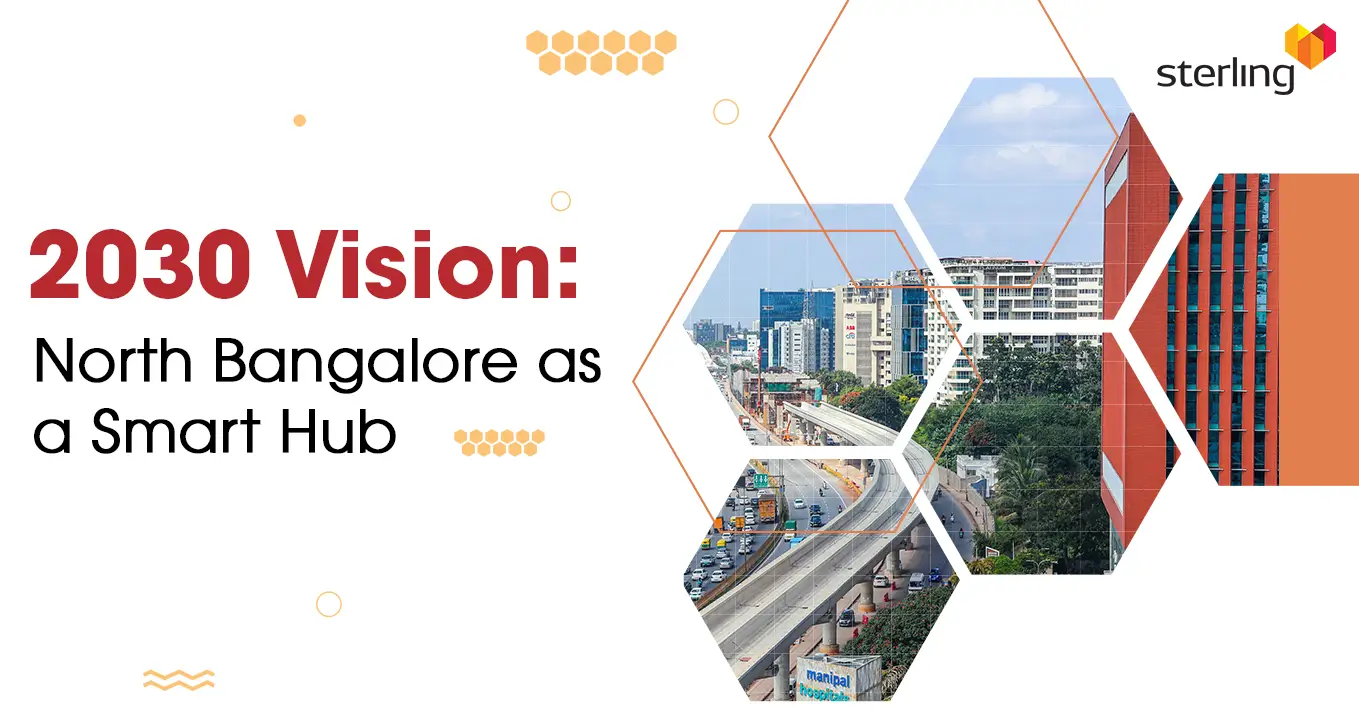
2030 Vision: North Bangalore as a Smart Hub
Bangalore has recently gained popularity as one of the most livable cities in India. In the Ease of Living Index 2025, the city ranked #1 among Indian metros, highlighting its achievements in urban planning, infrastructure, and quality of life. Over the past five years, housing prices in Bengaluru have surged by 79%, making it one of the fastest-appreciating real estate markets in the country.
In this flourishing backdrop, North Bangalore has been emerging as a pivotal growth corridor. Anchored by Kempegowda International Airport and enhanced connectivity, new launch projects in North Bangalore are shaping the city’s skyline and long-term urban identity.
By 2030, North Bangalore is set to evolve into a smart hub where infrastructure, sustainability, and technology blend seamlessly to create a future-ready city.
The Transformation Journey: From Emerging Zone to Smart Hub
Not too long ago, areas like Yelahanka, Devanahalli, and Hebbal were known for their open spaces and farmlands rather than high-rises or IT corridors. Yelahanka, one of the oldest settlements around Bangalore, silently observed as the city expanded to the south and east corners, leaving the north relatively untouched.
That changed dramatically with the launch of the Kempegowda International Airport (KIA) in 2008. North Bangalore transformed from a quiet suburb into a high-potential growth zone, almost overnight. Businesses, investors, and developers began to take notice, leading to large parcels of land being converted into planned residential and commercial developments.
Infrastructure quickly improved, with enhanced connectivity to key areas such as the Outer Ring Road, Manyata and Mekri Circle. The evolution of this region has been remarkable: wide roads, tech parks, entertainment zones, and gated communities now define the area once considered “too far.”
As Central and South Bangalore grow denser, the future of Bangalore is clearly unfolding in the north. Its balance of space, connectivity, and opportunity has attracted the attention of leading builders and developers, like Sterling, who are delivering innovative new launch projects in North Bangalore that align with the city’s evolving needs.
Infrastructure 2030: The Smart City Blueprint
These new projects are defining North Bangalore’s transformation into a smart hub. Developers are focusing on creating integrated townships and premium residential enclaves that combine advanced infrastructure, smart connectivity, and sustainable design.
Projects coming up in areas like Yelahanka, Hebbal, Thanisandra, Jakkur, and Hennur are designed to be ready for possession by 2030 and offer homebuyers access to modern, open and tech-enabled community spaces.
Smart infrastructure features within these projects include energy-efficient power systems and advanced water management solutions for IoT-based digital utilities. Many buildings are being constructed to meet green certification standards, promoting sustainable and eco-friendly living.
Developers like Sterling are at the forefront of this change, designing projects that go beyond conventional housing and reflect the evolving priorities of a future-focused city.
Employment & Economic Growth: North Bangalore as a Business Powerhouse
While world-class infrastructure attracts individuals to a location, job and professional opportunities are equally vital. North Bangalore has steadily evolved into a magnet for businesses, attracting tech parks, aerospace SEZs, and industrial clusters, particularly around Devanahalli.
The proposed Information Technology Investment Region, spanning nearly 40 square kilometres, will bring IT, biotech, and advanced manufacturing companies into the corridor, further solidifying the region’s role as a business hub. Global corporations are already tapping into this potential. Amazon, for instance, relocated its Bangalore office to Yelahanka, leveraging the improved connectivity and tapping into the growing talent pool.
This surge in job opportunities is directly influencing residential demand. Professionals are increasingly seeking homes close to workplaces, which has fueled a wave of new launch projects in North Bangalore. Developers are responding by designing mid-premium apartments, co-living spaces, and integrated communities that emphasise convenience, connectivity, and lifestyle, allowing residents to live, work, and thrive in the same ecosystem.
Lifestyle Evolution: Smart Living in North Bangalore
By 2030, living in North Bangalore will be defined by three core principles: convenience, sustainability, and connectivity. Developers are creating integrated townships that combine residential units with retail spaces, recreation areas, schools, and parks, transforming neighbourhoods into self-sufficient micro-ecosystems.
Smart homes equipped with home automation, energy-efficient systems, and modular layouts are becoming the new standard, reflecting the shift toward future-ready urban living.
The region’s ample open spaces, well-planned layouts, and lower congestion compared to central Bangalore make it increasingly attractive to families and working professionals. Additionally, the growing presence of educational institutions, healthcare facilities, and lifestyle hubs ensures that essential services are easily accessible without long commutes.
As these features become standard across developments, new projects in North Bangalore are meeting modern expectations while steering the future of Bangalore toward a smarter, more sustainable urban experience.
Real Estate Outlook 2030: Where to Invest Today
Between 2025 and 2030, North Bangalore is poised to enter a golden phase for real estate growth, making now an ideal time for investors and homebuyers to explore opportunities. Microzones such as Devanahalli, Bagalur, Yelahanka, and the corridors near the airport and IVC Road have already shown remarkable property value appreciation. Prime residential prices rose by approximately 8.3% in 2024–25, positioning Bangalore as the fourth fastest-growing city globally for prime housing.
Developers launching projects in these areas are integrating sustainability, connectivity, and future-ready infrastructure into their designs, ensuring the properties align with the expectations of buyers. Investment returns are expected to be driven by both infrastructure-led appreciation and steady rental demand from professionals relocating to the area. Projections indicate annual price growth of 8–10% and rental yields of around 4.5%.
Purchasing property in the 2025–2027 window offers buyers the advantage of early entry before infrastructure and metro connectivity fully mature, while still positioning them to secure long-term gains. Due diligence on RERA registration, approvals, and builder track records is essential. Partnering with trusted developers like Sterling Developers, known for their on-time delivery and quality, ensures a smooth investment experience.
Conclusion: 2030 – North Bangalore, the Smart Pulse of the City
By 2030, North Bangalore will no longer be viewed as a peripheral growth corridor. It will become the smart pulse of Bangalore. The region where infrastructure, economy, ecology, and lifestyle converge. The new launch projects in North Bangalore that are taking shape today are laying the foundation for this transformation.
For investors and homebuyers seeking long-term growth, the potential of this region in Bangalore is unmistakable. Partnering with trusted developers like Sterling Developers, known for redefining urban living through thoughtfully designed, future-ready communities, ensures that you don’t just buy real estate but invest in the future of Bangalore.
FAQs
- Why is North Bangalore considered the next real estate hub?
- What types of new launch projects are available in North Bangalore?
- How will North Bangalore evolve by 2030?
North Bangalore is rapidly gaining recognition as a prime real estate investment destination due to its strategic proximity to the airport, upcoming metro lines, and a burgeoning IT sector. These factors contribute to its potential for high returns on investment (ROI), making it an attractive option for property buyers.
The region features a diverse array of new launch projects, including premium apartments, plotted developments, and integrated townships. This variety caters to a broad spectrum of buyer segments, from young professionals seeking affordable housing to luxury investors looking for upscale properties.
By 2030, North Bangalore is poised to become a smart and sustainable urban hub. The area is set to benefit from advanced mobility solutions, enhanced digital infrastructure, and improved living standards, positioning it as a key component of the future landscape of Bangalore.
- November 21, 2025
- No Comments